
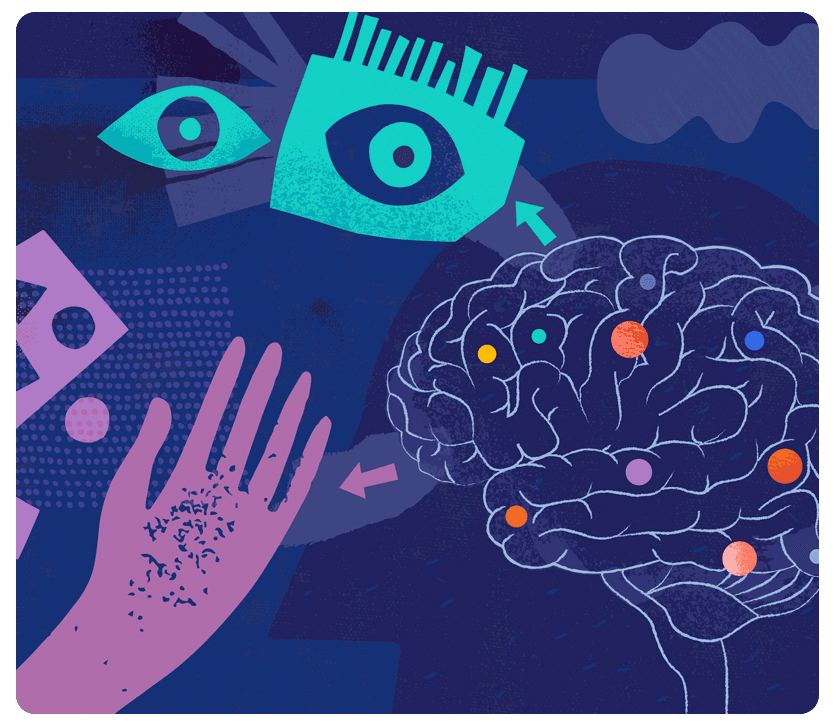
Print isn't just four-color ink on plain stock anymore. Today's printing technology offers a multi-sensory experience that excites and engages your audience in ways digital marketing cannot match. By appealing to multiple senses, you create memorable interactions that drive deeper connections with your brand and boost sales. Here's how the five senses of print can transform your marketing.
1. Texture: The Power of Touch
Texture invites people to interact with your printed piece physically. Soft-touch coatings create a velvety finish that begs to be picked up and opened, while raised UV coatings add dimension that catches both the eye and fingertips. Embossing and debossing create tactile patterns that convey luxury and craftsmanship. Textured papers, from linen to felt finishes, communicate quality before a single word is read. When someone touches your marketing material, they're literally making contact with your brand, creating a physical memory that lasts far longer than a fleeting digital impression.
2. Scent: Triggering Emotional Connections
Scented inks and coatings add an unexpected dimension that stops recipients in their tracks. A bakery's direct mail piece infused with vanilla and cinnamon, a spa's brochure infused with lavender, or a coffee shop's flyer with the aroma of rich roasted beans creates immediate emotional associations. Scent is powerfully linked to memory and emotion, making it one of the most effective ways to ensure that your marketing materials are noticed and remembered.
3. Color: Capturing Attention and Emotion
While color has always been part of print, today's capabilities go far beyond standard CMYK. Metallic inks add shimmer and sophistication. Fluorescent colors pop off the page with eye-catching vibrancy. Specialty Pantone colors that ensure your brand colors are reproduced with absolute precision. High-definition printing delivers rich, saturated hues that make images leap off the page. Strategic color choices influence mood, convey brand personality, and guide the reader's eye exactly where you want it to go.
4. Video: Bridging Print and Digital
Print and digital don't have to be separate experiences. Embedded video technology, personalized URLs (PURLs), and QR codes seamlessly connect your printed materials to dynamic video content. A product catalog can link to demonstrations, a direct mail piece can feature customer testimonials, and business cards can showcase your portfolio. This integration creates a richer storytelling experience while providing measurable engagement data.
5. Dimension: Breaking the Flat Plane
Three-dimensional printing techniques transform flat paper into interactive experiences. Pop-up elements surprise and delight, die-cuts create visual intrigue and functionality, while layered designs add depth and visual interest. When your marketing literally stands up and demands attention, it's far more likely to be kept rather than discarded.
Creating Your Sensory Strategy
While each one of these elements is highly effective on its own, the real magic happens when you combine them. Imagine a textured invitation with metallic accents and a QR code leading to a personalized video message. By engaging multiple senses, you create memorable experiences that differentiate your brand and drive measurable results.
Which of these sensory experiences would benefit your next marketing campaign?
